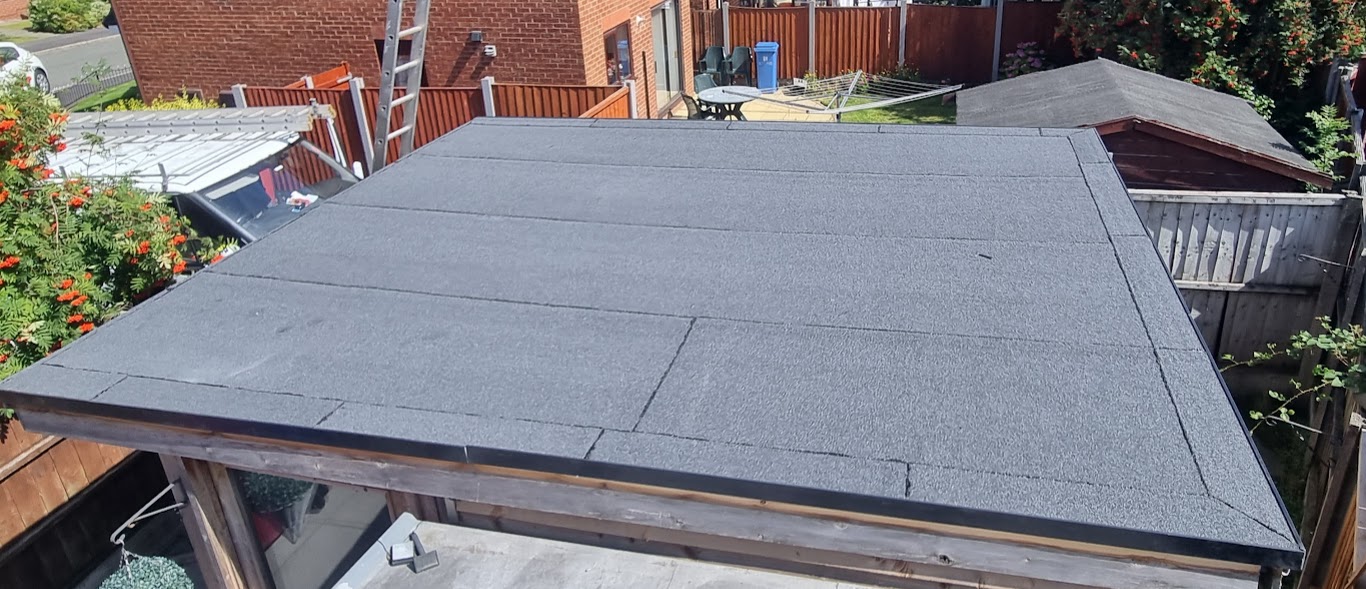
Plan the Work Before the Roof Comes Off
A flat roof replacement is easier to manage when access, protection and decisions are agreed before work starts. For a Liverpool terrace, garage or rear extension, the practical arrangements can be just as important to the household as the choice of roof covering.
Ask for a written scope and a clear explanation of the proposed sequence. You need to know what is being replaced, which parts remain, how the property will be protected and who will contact you if opening the roof reveals a problem. A start date alone is not a complete plan.
Before booking: agree the work area, access route, waste arrangements, weather contingency and process for approving extra work. Keep a copy of the quotation and the agreed specification.
Confirm Exactly What Is Included
Two quotations described as a “new flat roof” may cover different work. One may allow for stripping the old covering, while another proposes an overlay. Deck repairs, insulation, rooflight details, outlets, edge trims and internal decoration may be treated separately.
Ask which elements have been inspected and which cannot be confirmed until the covering is opened. A sensible quotation explains these uncertainties rather than presenting every concealed component as sound. For the difference between an overlay and a full strip, see our guide to installing a roof over an existing covering.
- Confirm the proposed roof system and the preparation it requires.
- Identify which decking, insulation and perimeter details are included.
- Clarify responsibility for rooflights, outlets and connections to adjoining roofs.
- Ask what inspection photographs and completion information will be provided.
- Record exclusions, payment stages and how changes will be priced and approved.
Arrange Access and Deliveries
Show the contractor the available route to the roof before the start date. A narrow passage, shared entry or route through the house can affect the equipment and protection needed. Mention locked gates, overhead cables and any restricted space for deliveries.
Agree where materials can be placed without blocking doors, paths or emergency exits. Discuss parking and whether neighbours need advance notice of deliveries or scaffolding. If access depends on someone else’s land, resolve permission before booking work that relies on it.
The contractor should decide and provide suitable working-at-height arrangements. Homeowners should not improvise access, move scaffold components or use the contractor’s ladders to look at progress. HSE warns that roofs and rooflights may be fragile even when they appear sound.
Protect the Rooms Below
Ask how much noise, vibration and dust to expect and which rooms may be affected. Move fragile or valuable belongings from the immediate work area where practical. Discuss protection for furniture and stored items rather than assuming the quotation includes every internal surface.
A garage may contain tools, bicycles or electrical equipment directly below the deck. An occupied extension may contain a kitchen, desk or children’s play area. Tell the roofer how those spaces are used so the working area and daily access can be planned around the actual household.
Keep children and pets away from deliveries, tools, waste and access equipment. Agree whether the household can use the area beneath the work at each stage. If you work from home, plan for noisy periods and ask for notice of any agreed interruption to services.
Discuss Rain and Temporary Protection
Roofing work depends on suitable conditions for the chosen system. Ask how the forecast will be assessed, when a start may be postponed and how exposed areas will be managed during the job. Avoid assuming that every replacement can be completed within a fixed number of days.
The contractor should explain the intended daily stopping point and the arrangements for keeping the building protected. Ask who to contact if you notice a problem after the team leaves. Do not climb onto the roof to adjust temporary coverings yourself.
Allow flexibility for changes in conditions or defects uncovered during removal. A revised programme should explain what has changed and how the property will be protected while the remaining work is arranged.
Agree a Process for Hidden Damage
Removing a covering can reveal damp or deteriorated decking that was not visible during the initial inspection. Before work begins, agree how the contractor will document unexpected findings and obtain approval for changes to the price or specification.
Ask for photographs and a clear description of the affected area. Where possible, obtain the proposed remedy and additional cost in writing before it proceeds. Discuss in advance what immediate protective work may be needed if the roof cannot safely be left in its current condition.
If unfamiliar or potentially hazardous materials are uncovered, leave their identification and handling to competent professionals. Do not break up or dispose of suspect materials yourself. The safe response may require the work sequence to change.
Check the Handover Before Signing Off
Ask the contractor to explain the finished roof using photographs or another safe viewing method. Confirm that waste removal and the agreed clean-up are complete, and raise any snagging points promptly. Do not walk onto the roof to inspect it yourself.
- Keep the final invoice and agreed specification.
- Request maintenance and inspection advice for the installed system.
- Obtain any warranties actually included and understand their conditions.
- Confirm who to contact if a defect or leak develops.
- Check which completion or building-control documents, if applicable, form part of the agreed work.
Arrange a Flat Roof Assessment in Liverpool
J&S Roofing Services provides flat roofing and replacement advice across Liverpool and Merseyside. When requesting a quote, provide your property location and any access restrictions, and ask how to share photographs privately. That helps the discussion cover the work and the practical arrangements together.
For broader survey preparation, read our flat roof inspection guide. HSE also provides guidance for domestic construction clients and information about fragile roof surfaces.
Need Flat Roofing Advice?
Tell J&S Roofing Services about your roof and request a quote.