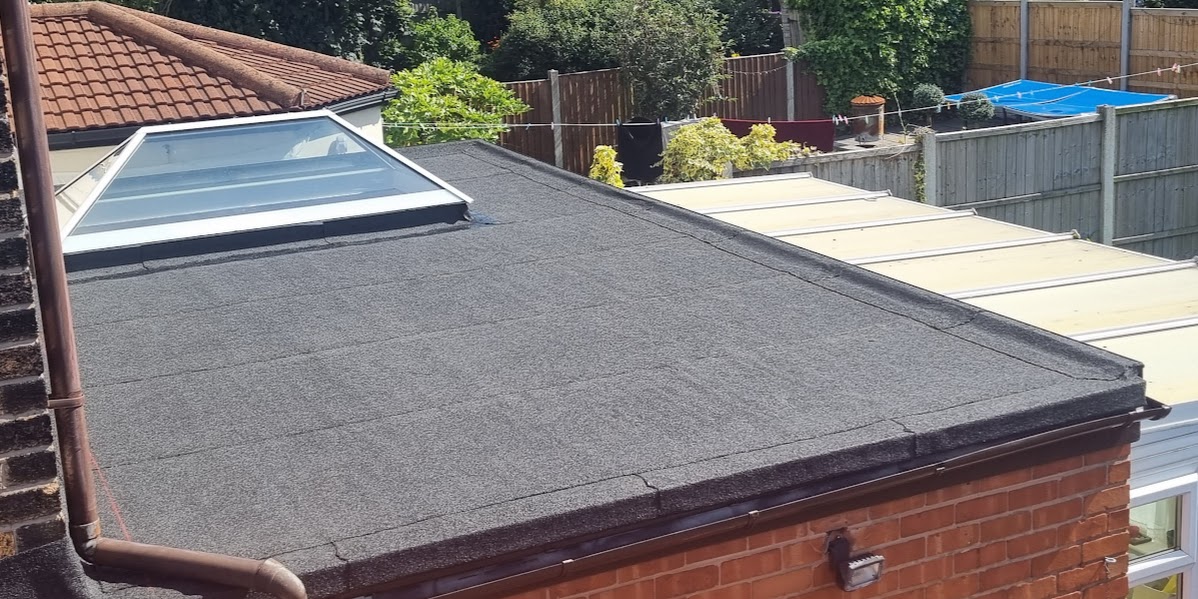
Water Around a Rooflight: Where Do You Start?
A damp patch beside a flat roof skylight does not automatically mean the whole roof needs replacing. Water may be entering around the frame, through a damaged roof covering or at a nearby junction before travelling to the ceiling opening. Moisture on the inside of the glass can also be condensation.
For a Liverpool homeowner, the useful first step is to record when and where the water appears, then arrange an inspection. A diagnosis based only on the position of an indoor stain can miss the actual entry point and lead to another unsuccessful patch repair.
Keep checks indoors or at ground level. Do not climb onto a flat roof, lean out to reach a rooflight or stand on its glazing. HSE identifies rooflights as a particular fragile-surface hazard. A professional must plan safe access before inspecting the outside.
Is It a Leak or Condensation?
Note whether the moisture follows rainfall, appears during windy showers or forms on cold mornings after cooking, showering or drying clothes. These observations help the roofer decide what to investigate; they are clues rather than proof.
Droplets on the room-facing glass may be caused by warm, moist indoor air meeting a cold surface. VELUX explains that roof windows and flat roof windows can make condensation especially noticeable because warm air rises. Use suitable room ventilation and working extraction, but do not assume this resolves persistent staining around the frame.
Moisture trapped within glazing, repeated water running from a frame joint or staining that develops during rain needs further assessment. Different rooflight designs have different drainage and sealing arrangements. The model and installation instructions matter. Our flat roof condensation guide explains the wider distinction between indoor moisture and roof leaks.
Which Details Need Checking?
A rooflight sits within a complete waterproofing system. An inspection should consider the surrounding covering and drainage as well as the visible glass or dome. Ask the roofer to explain which detail appears defective and what evidence supports that conclusion.
- The raised kerb or upstand: the junction between the roof covering and the structure supporting the window.
- Membrane corners and seams: splits, lifting edges or poorly formed transitions around the opening.
- The frame and glazing: damage, displaced components or seals that need assessment against the manufacturer’s requirements.
- Nearby drainage: debris or standing water that may expose weaknesses around the opening.
- Adjacent roof details: wall junctions, penetrations and other routes from which water could travel.
This list is a guide for discussing a survey, not an instruction to dismantle a rooflight. Removing covers or applying a different sealant without identifying the system can make diagnosis harder and may affect an existing warranty.
What Can You Record Safely?
Take photographs of the indoor stain and, if visible safely from a window, the general roof area. Include a wider view so the roofer can understand its position. Keep a short note of the weather, the first sign of moisture and whether the problem stops when the rain ends.
If you already have installation paperwork, share the rooflight model, approximate age and details of earlier repairs. Tell the roofer whether the roof covering was replaced after the window was fitted. A changed roof height or altered junction can be relevant, but its significance needs checking on site.
Move belongings away from a leak where it is safe to do so. Keep clear of sagging ceilings, water near electrical fittings and damaged glazing. Seek appropriate urgent professional help if any of those hazards are present. Do not puncture a ceiling or touch wet electrical equipment.
Can the Surrounding Roof Be Repaired?
A local repair may be possible where the fault is confined to a detail and the adjoining materials are sound. The repair needs to be compatible with both the roof system and the rooflight, rather than simply covering the visible joint with a general-purpose product.
If investigation finds wet insulation, damaged decking or a failing window assembly, the scope may be wider. Ask for the quote to separate the roof-covering repair, any rooflight work and any internal making-good. A roofer should explain whether another trade or the window manufacturer needs to be involved.
Repeated leaks deserve a fresh diagnosis. Before agreeing to another patch, ask what has changed in the proposed approach and how concealed damage will be checked. Our flat roof survey guide sets out useful questions for an inspection.
Questions to Ask Before Work Starts
- Is the likely fault in the rooflight, the roof covering or the junction between them?
- What further investigation is needed before the price and scope can be confirmed?
- Which compatible materials and manufacturer details will be followed?
- How will the opening be protected if a component must be removed?
- Who will check the finished work and explain maintenance requirements?
Rooflight Leak Advice in Liverpool
Contact J&S Roofing Services with your location and a description of when the leak appears. Ask whether the team can assess the roof and how to share any photographs privately. Avoid assuming that a new rooflight or a complete replacement is necessary before the source has been assessed.
Further Guidance
Read HSE guidance on fragile roof surfaces and VELUX guidance on window condensation. Product-specific repairs should follow the relevant manufacturer’s instructions.
Need Flat Roofing Advice?
Tell J&S Roofing Services about your roof and request a quote.